How to play Angry Balls: one slingshot pull, move by move
You learned most of this on a phone years ago, so give it a minute: set a stake between 0.10 and 1,000, pick one of six angles, pull the slingshot, let go. Everything the ball smashes adds to one multiplier, and the multiplier meets your stake when the ball stops moving. Below is what happens inside those three moves, and the one habit that costs beginners the most.
The round in the order it happens
Nothing here is hidden behind menus. The whole sequence fits on one screen, which is the point of the format.
-
Set the stake
The dial runs from 0.10 to 1,000 in the currency of your balance. Every multiplier collected later is applied to this figure.
-
Choose base or paid mode
Base costs the stake. Bomb Mode costs 25 times it, Max Treasure Mode costs 100 times it. The two are compared on the bonus buy page.
-
Pick the angle
Six positions on the dial. Each carries its own return and its own cap, from 6,500x down to 3,225x.
-
Pull and release
Drag the ball back until the aiming ring turns green, then let go. From this moment the round runs on physics: bounce, impact, collapse. A half pull does not fire, the game tells you so on the first launch.
-
Collect on the way
Coins and power ups sit along the flight path. Both are picked up on contact, and power ups apply immediately.
-
Read the total
When the ball stops, the collected multipliers are summed and paid against the stake. Clear the layout completely and the wheel spins first.
What each coin adds to the round
Coins do not pay separately. Each one raises a single multiplier that is applied once, at the end.
| Symbol | Adds |
|---|---|
| Bronze coin | +0.25x |
| Silver coin | +1.00x |
| Gold coin | +5.00x |
| Diamond | +10.00x |
A shot that takes four gold coins and a diamond is worth +5.00x four times plus +10.00x, so 30x the stake before the wheel is considered.
The three power ups and when they matter
Bonus symbols sit in the gap between the slingshot and the tower. Hitting one changes the shot already in flight, and effects stack on the same ball. Angry Birds gave each bird one trick; here the tricks float in the air and you collect them.
-
Split
Adds balls to the shot, so three fly at the structure instead of one. Three balls cover three lines through the structure, which is the fastest route to a full clear.
-
Ghost
The ball passes through walls and still breaks a coin on contact. Useful against tall stone fronts that would otherwise stop the shot at the first wall.
-
Grow
Raises the size and the mass of the ball, which helps it punch through. Mass carries through collapsing wood instead of stopping in it.
The same rules, straight from the game
Two help screens the game shows on first launch. Worth comparing against the tables above: the numbers match.
-
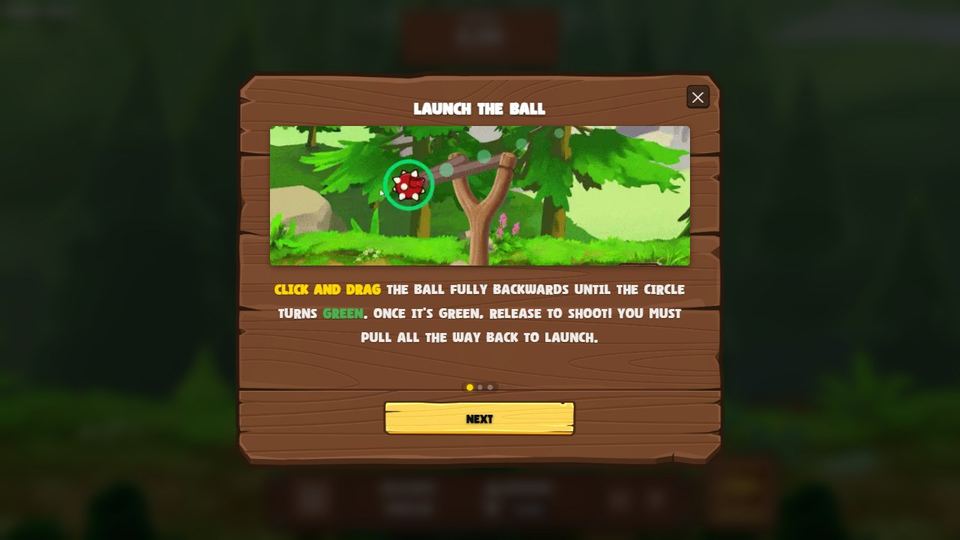
Step four in the list above, as the game words it. A half pull does not release the shot. -
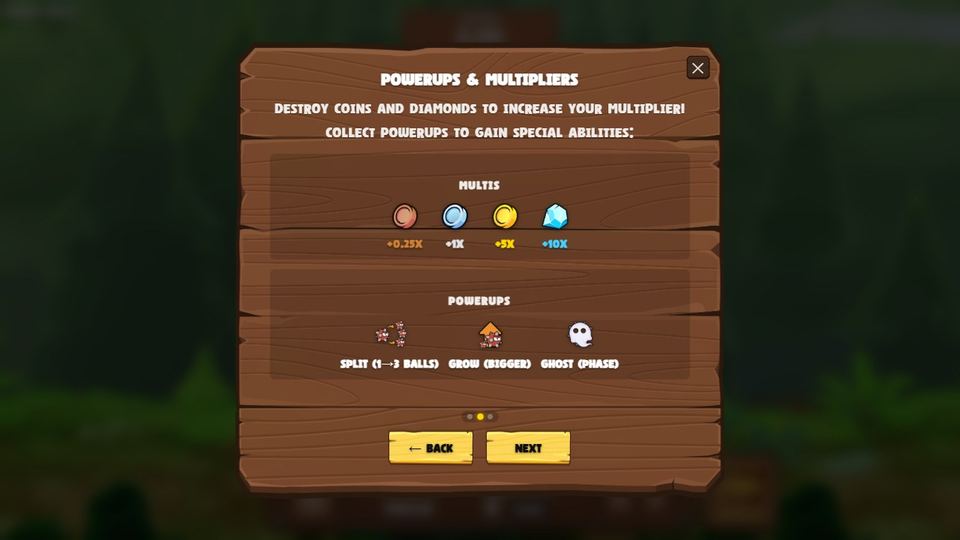
Coins from +0.25x to +10.00x, and the three power ups under their in game names.
The one habit that costs beginners money
People pick an angle, get a bad result, and switch. Then they switch again. Two rounds later they are cycling the dial on the assumption that the angle failed them, when the tower was what changed. Structures are drawn at random before each shot and stay hidden until the ball is airborne, so a single round says nothing about the position you chose. I did exactly this for my first twenty shots and learned nothing except how the dial sounds.
The return spread across the whole dial is three hundredths of a percent, from 96.51% down to 96.48%. The ceiling spread is the part that differs: 6,500x at the top against 3,225x at the bottom. Choose the angle for the cap you want, then leave it alone.
Beginner questions about the round
Can I see the layout before I shoot?
No, and this is the sharpest difference from Angry Birds. The structure is revealed as the ball travels. The comparison with the original is on its own page.
Are there free spins?
None. There are no free spins and no respins in this game. The paid modes replace them, at 25x and 100x per shot.
How do I trigger the bonus wheel?
By leaving nothing standing: every coin on the layout destroyed. The wheel then adds between 1x and 1,000x to the round.
Is the outcome decided when I release?
The result is produced by a random number generator and the game is published as provably fair, so the outcome is settled at launch rather than by how long you aim.
What is the smallest stake I can learn on?
0.10 per shot in base mode. Or nothing at all, in demo.